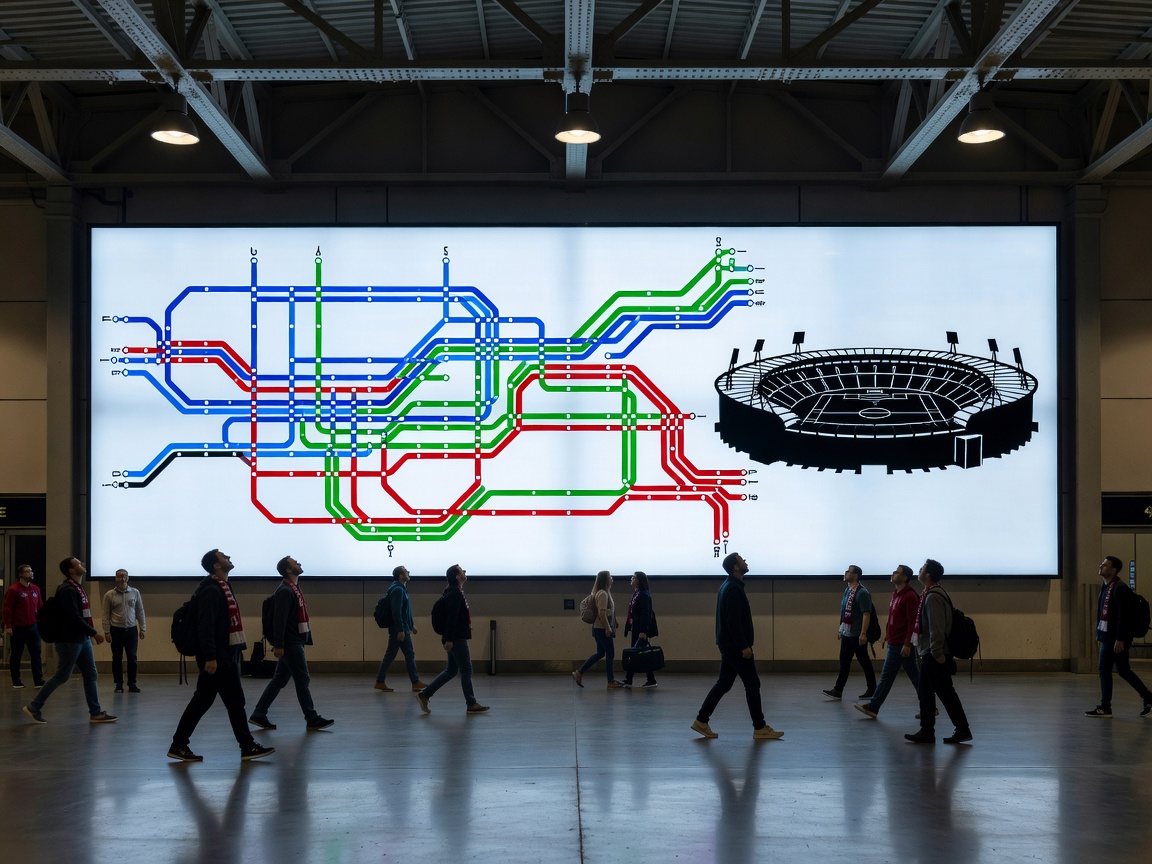
Start with the shape of the trip
Before choosing a match, decide what kind of trip you want. A same-day out-and-back, a one-night city break and a longer multi-match route all make different demands. October can be ideal because there is enough football to choose from without the full winter drag on transport and walking conditions, but the month also contains enough midweek rounds and derby weekends to make hasty planning expensive in time and effort.
The most common mistake is picking the fixture first and only then checking the route. A famous club in a poorly connected stadium can be harder to manage than a less celebrated opponent in a city with strong rail, airport and metro links. Begin with the travel frame: arrival window, local transit, distance from city centre and how late you can still move safely and sensibly after the final whistle.
Not all famous stadiums are convenient stadiums
European football grounds vary widely in how they sit inside the city. Some are tightly integrated into an urban transit network. Others are effectively edge-of-city venues where matchday movement depends on shuttle systems, taxis or a long walk. That matters more in October because evening kick-offs can combine with commuter traffic and wetter conditions.
When comparing options, ask practical questions. How many transport changes does the journey from airport or station require? Is there a clear late return route? Does the area around the ground stay easy to navigate when crowds spill out? A stadium with huge reputation can still be a poor choice for a short trip if your exit options collapse after full time.
Cities such as Madrid, Milan, Lisbon, Munich or Amsterdam often reward planning because public transport is usually a meaningful part of the football experience. Large metropolitan areas can still produce long journeys, but they tend to offer alternatives. In other places, the last stage to the ground is the decisive one and deserves more attention than the flight itself.
Use the competition to guide the journey
Different competitions create different travel logic. A Champions League fixture may offer prestige but heavier demand around hotels, tickets and city movement. Europa League and Conference League ties can deliver easier access to a new ground or city, especially if the host venue sits closer to the centre or if the match attracts a slightly more localised crowd pattern. Domestic derbies promise atmosphere but can also intensify transport restrictions and crowd management.
The right choice depends on your aim. If you want one iconic night, a major continental tie may justify more complexity. If you want a smoother football break, a strong domestic match or a well-chosen Europa fixture might give more football value per hour of planning. October is full of trade-offs like that.
Timing matters more than distance
A shorter journey is not always the easier one. Flight times, airport locations and the reliability of the last rail connection can matter more than the headline mileage. A city that appears close can become awkward if the final urban transfer is slow or if a late kick-off squeezes the return. Conversely, a longer direct route into a city with efficient local transit may feel much simpler door to door.
This is especially important for midweek football. Continental nights often end at a time when every onward leg matters. Check not only how to reach the ground but how to leave it under pressure. A straightforward route on an ordinary day can feel very different when thousands of supporters reach the same platforms at once.
Choose matches by fit, not only fame
If you are neutral, think about fit. A title-race fixture can be ideal if you want football tension and strong atmosphere in a city with good logistics. A derby can be brilliant if you accept tighter movement and a busier urban environment. A Europa or Conference tie can be the best option if you want a more unusual city-stadium pairing and a clearer sense of place.
Also think about what surrounds the match. Is the stadium near a neighbourhood worth spending time in? Can you build the day around a walk, museum or easy meal, or will most of the energy go into transit? A good away day has rhythm. It should feel like a complete urban plan rather than a frantic sprint to a turnstile.
A practical checklist for October
Before committing, check ticket route, airport or rail arrival window, local transit after full time, accommodation spread, weather-appropriate walking distance and the wider fixture calendar in the host city. Two large events on the same evening can transform transport conditions. So can engineering works on a rail line or a late schedule change.
October rewards supporters who treat planning as part of the enjoyment rather than dead admin. The month offers some of the best football variety in Europe. The trick is matching the right match to the right trip shape. Do that well and the evening feels coherent from first train to final whistle.